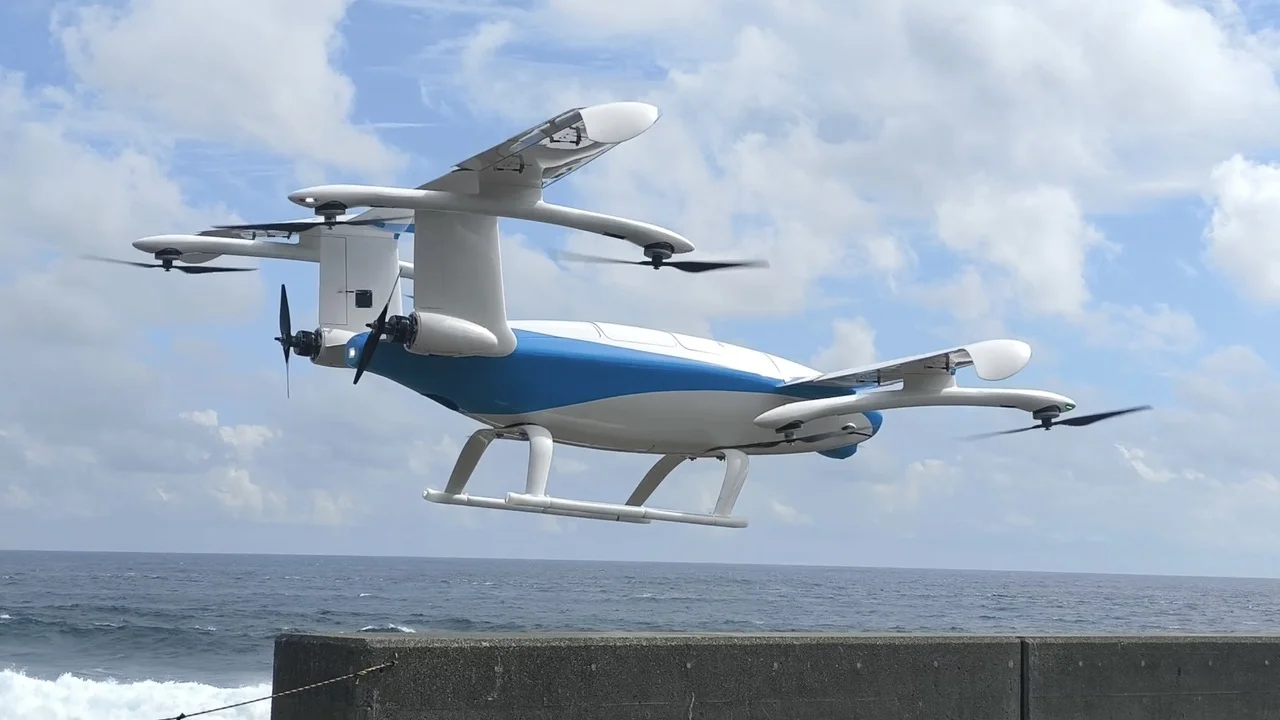
The International Organization for Standardization's subcommittee for unmanned aircraft systems (SC 16) and its subcommittee for airport infrastructure (SC 17) agreed to set up a joint working group, led by South Korea, to develop international standards for vertiports, the take-off and landing sites of passenger vertical take-off and landing aircraft. The decision came at their 22nd plenary meeting at Sejong University in Seoul from 17 to 20 November, according to the Korean industry association that serves as SC 16's national secretariat.
It follows a recommendation of the advanced air mobility advisory group (AG 7), chaired by Jang Hyun-young, head of KEPCO Engineering & Construction. Because vertiports are where aircraft standards and airport standards meet, the two subcommittees will write the standards together. Korean experts presented two first proposals for the group, on testing optical video surveillance systems at vertiports and on operating electric charging systems.
The Korean delegation presented six new proposals in total. The largest, prepared with support from the Ministry of Trade and Industry and presented by Konkuk University's Kim Sang-ho and Ryu Se-a, would set standards in five parts for detecting faults in the motors, speed controllers, batteries, structures and propellers of multicopters with a maximum take-off mass of up to 150 kg, with 36 condition indicators and 20 validation tests. New proposals go to a vote of member countries after revision. The next SC 16 plenary meeting is planned for July 2027 in Montreal.
Background
ISO/TC 20/SC 16
Standards committee
The subcommittee of the International Organization for Standardization for unmanned aircraft systems.
ISO/TC 20/SC 17
Standards committee
The subcommittee of the International Organization for Standardization for airport infrastructure.
Konkuk University
University
A South Korean university that builds the digital twin and trains the collaboration AI in Clobot's humanoid project.