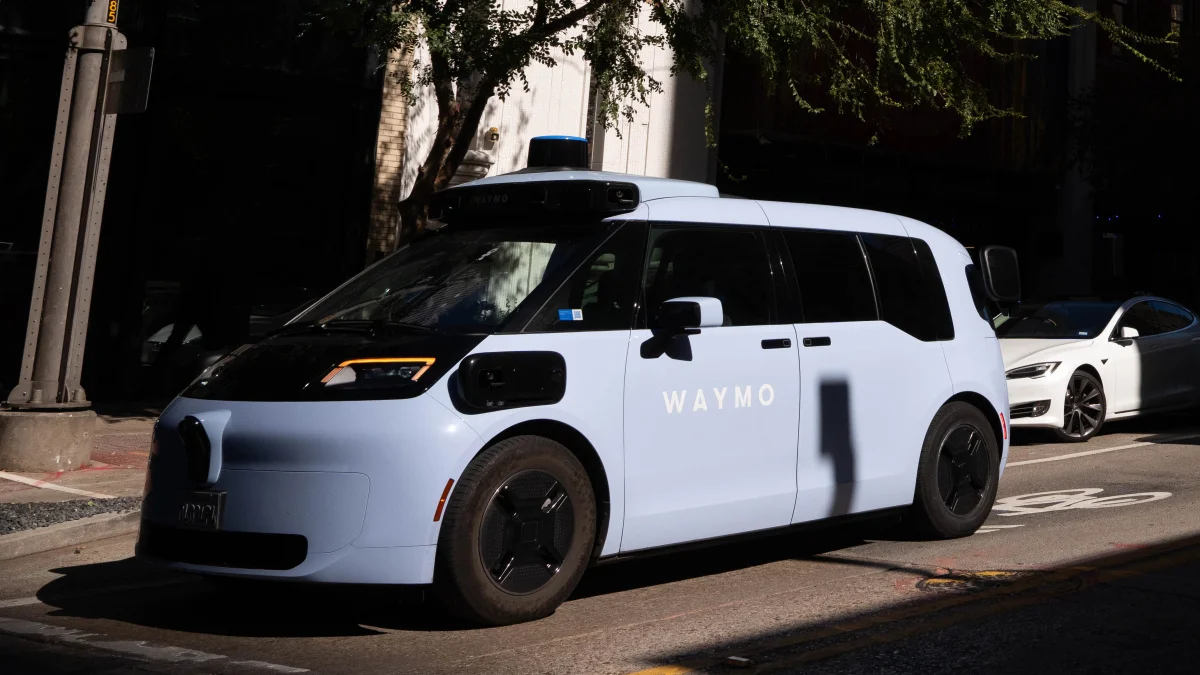
Tesla's Cybercab has eight crashes on file with the US National Highway Traffic Safety Administration (NHTSA), barely two months after the robotaxi started giving public rides in Austin, Electrek reports in an analysis of the agency's latest data. Four happened in the driverless Robotaxi service, none above 5 mph. The other four happened in September with a test driver aboard and Tesla's driver assistance engaged, among them a 53 mph collision with another car on a Philadelphia highway.
The driverless crashes were minor: a pothole in a parking lot, two collisions caused by other cars, and a drive over a parking-lot edge and down a curb at up to 3 mph. Two of the eight crashes caused injuries, both in the test fleet. Across all 43 Tesla Robotaxi reports in NHTSA's driverless file, the highest speed before a crash was 29 mph, and none happened on a highway. Tesla redacted the descriptions of the four test-driver crashes, so the data do not show who was at fault.
Electrek's Fred Lambert argues that Tesla's robotaxi service looks clean mainly because it runs slowly, avoids highways and stays in small zones, and that Tesla is right to do so for now. Tesla's own safety report of 21 October claims no one was injured by Robotaxi over 3,112,541 driverless miles; it does not cover the Cybercab test fleet.
Background
National Highway Traffic Safety Administration
Road safety regulator
The US federal agency whose Office of Defects Investigation looks into vehicle safety recalls.
More stories about National Highway Traffic Safety Administration
Cybercab
Robotaxi
A two-seat self-driving car from Tesla without a steering wheel or pedals, built for robotaxi service.
More stories about Cybercab
Tesla
Carmaker
Tesla makes electric cars, runs a Robotaxi service in US cities and has started selling the Cybercab, a two-seat car without a steering wheel or pedals.