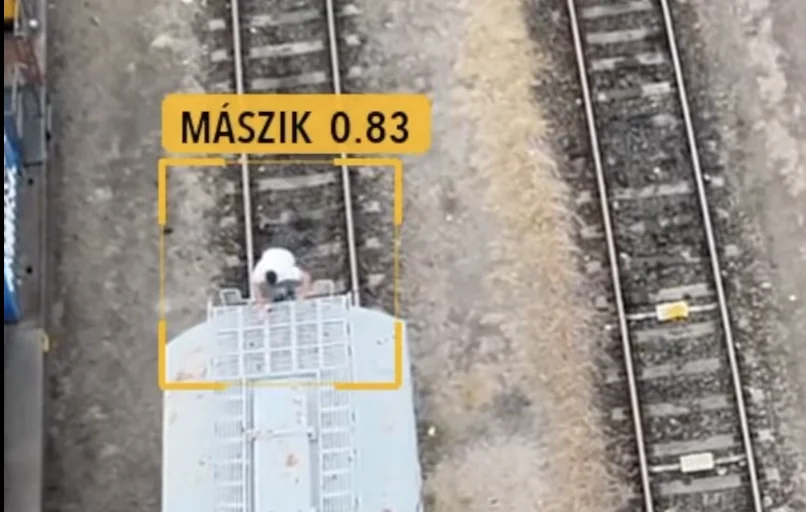
At the Euronaval naval exhibition, European company Rift announced the start of real-world trials for a new autonomous drone surveillance system off the coast of France. The project is backed by 1.3 million euros in funding from the French government's "France 2030" investment program. The initiative aims to demonstrate the operational capability of remote-controlled drones operating from automated ground stations to complement existing maritime monitoring networks.
The concept is designed to bridge the gap between initial detection and definitive visual identification, providing details on vessel type, cargo, and activities that coastal radars alone may not clarify. When a coastal radar or sensor detects a suspicious object, a drone can be automatically dispatched from a nearby station without personnel on site. The drone is expected to reach the designated maritime area within minutes, transmitting high-resolution daylight or thermal video back to a central control center. If an operation is prolonged, another drone takes over surveillance to maintain continuity.
Rift's operational model uses a decentralized network of automated stations instead of traditional patrol aircraft, helicopters, or large long-range drones. Each station houses multiple ready-to-fly drones managed centrally via the company's proprietary software, RiftOS, enabling round-the-clock surveillance without station personnel. Identified use cases include combating smuggling, monitoring fishing activities, detecting environmental pollution, maritime security, and search and rescue missions.
Rather than requiring clients to purchase aircraft or establish maintenance and operating teams, Rift operates on an aerial reconnaissance-as-a-service model where customers pay only for the services they use. The trials are intended to create a standardized station architecture to prepare for a broader expansion across the French coast.