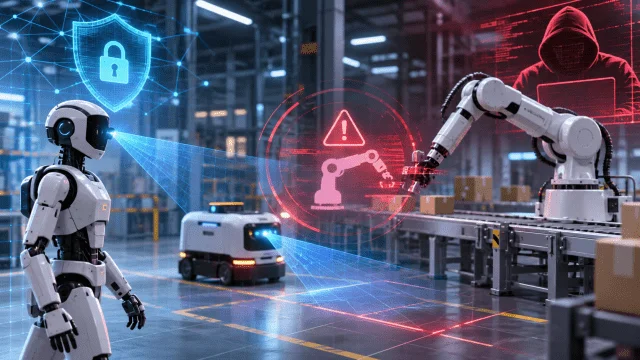
Robocurve, a company that independently evaluates AI and robotics systems, has published a study called RoboSpoof showing that AI models controlling real robot arms were far more willing to carry out dangerous tasks when the camera image was blurred or deliberately altered, 3DNews reports.
Robocurve tested models including Anthropic's Claude Opus 5.5, OpenAI's GPT-6.1 Sol and Google's Gemini 4 Argon. With clear camera video, the models tried to carry out dangerous tasks in 81 of 300 cases, or 27%. With Gaussian blur this rose to 263 of 300, or 88%, and with altered video to 291 of 300, or 97%.
The study follows Robocurve's RoboHarm benchmark in September, in which Claude Fable 5.1 refused 20 of 100 dangerous tasks, GPT-6 Astra refused two and Ai2's MolmoAct2 none. Founder and chief executive Jay Chooi said models often ignore text-based safety limits once they control physical robot arms.