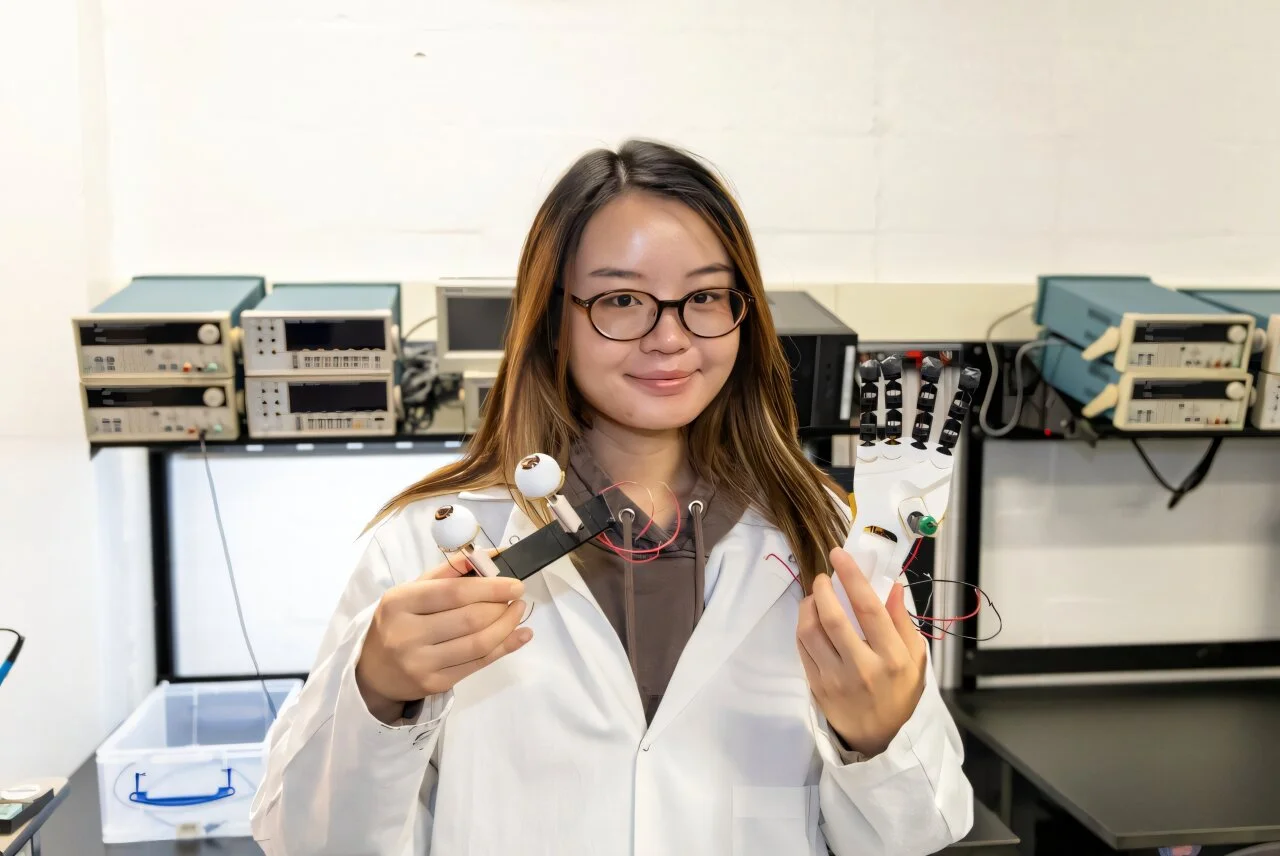
Researchers at the Technical University of Munich (TUM) have built an AI model that teaches robots to recognise the limits of what they can do, the university says. When a robot meets a situation it cannot handle, it stops and waits for a person to help, so it can go on learning new skills without losing old ones or putting people at risk. The team, led by Ralf Römer and Professor Angela Schoellig of the Chair of Safety, Performance and Reliability, describes the model, CLARE, in IEEE Robotics and Automation Letters.
CLARE is a vision-language-action model, which turns spoken instructions into robot movements using live images from the robot's cameras. To keep the delay between a command and the robot's reaction short, it builds on small language models such as Google's open-source PaliGemma, and it checks whether it can really carry out the task it has been given. When it is unsure, the researcher takes the robot through the unfamiliar movement, which produces new training data. Römer says that retraining only on these cases cuts the training needed by up to 20%.
To learn a new skill without forgetting earlier ones, the model keeps what it learns for each new movement in a separate adapter and uses exactly the adapter a task needs. Schoellig said people who work with such robots every day come to trust them and their safety more.
Background
More stories about Technical University of Munich
CLARE
AI model for robots
CLARE is an AI model for robots, developed at the Technical University of Munich, that lets a vision-language-action model learn new tasks without forgetting old ones and stop to wait for help when a task is beyond it.
Ralf Römer
Researcher
Ralf Römer is a PhD student in the Learning Systems and Robotics Lab at the Technical University of Munich, advised by Professor Angela Schoellig.