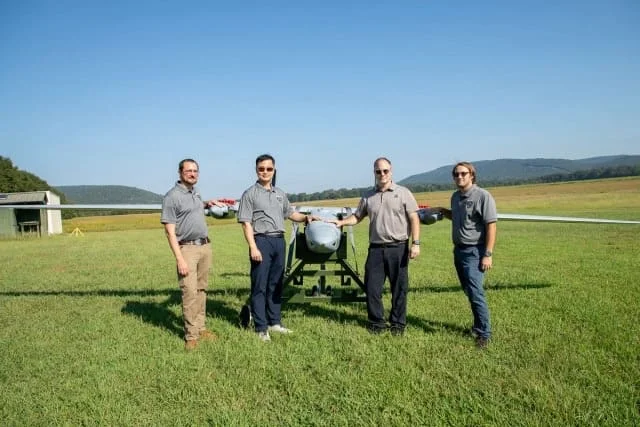
A research team led by aerospace engineering professor Hak-Tae Lee at Inha University published a study on 5 November 2026 analysing urban drone delivery costs across Seoul. The researchers modelled parcel operations and found that expanding departure hubs from one to four lowers drone weight but nearly doubles operating expenses per delivery.
Using delivery records from 47,674 parcels handled in Seoul in June 2022, the simulation compared delivery networks with one to four hubs. Increasing hubs reduced the maximum flight distance from 30.55 kilometres to 21.86 kilometres, allowing battery capacity to shrink from 721 watt-hours to 394 watt-hours and cutting drone weight from 8.12 kilograms to 6.12 kilograms. Monthly electricity consumption also dropped by 13.1 percent because lighter drones require less energy per kilometre.
Despite the energy savings, total monthly operating costs rose from 56,173 dollars with one hub to 105,021 dollars with four hubs, raising the cost per delivery from 1.18 dollars to 2.20 dollars. Rent, labour and management accounted for 77.4 percent of operating expenses in the four-hub setup, compared with 56.9 percent for a single hub. Battery replacement was the largest drone-related expense, reaching 15,875 dollars per month for four hubs.
The researchers concluded that reducing drone mass and energy consumption does not necessarily lower operating costs, noting that delivery network planning must evaluate both energy demand and operating expenses together.