Apple has published a paper on arXiv, titled Perceptive Humanoid Motion from Simulation, that describes HALO, a system that trains a humanoid robot to act on its own with data generated in simulation instead of data collected by people operating the robot.
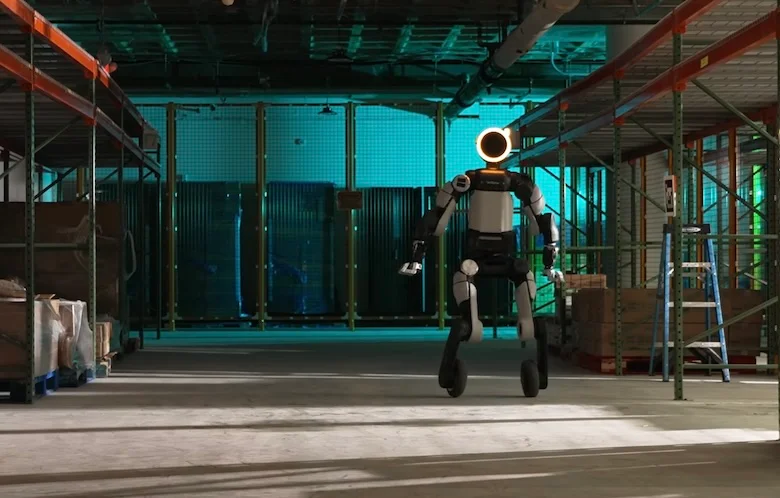
HALO builds vision, language and action data in 1,000 homes created in a virtual environment. The researchers tested it on Unitree's G1 humanoid robot, which sat on a chair, walked to a given object, sidestepped through a half-open door, crawled under a table and pushed a box, and combined several such skills into longer tasks.
According to Apple, the robot never experienced a real home during training and carried its skills into real rooms without further training. In 360 trials across six real environments that had not been mapped in advance, it succeeded 91% of the time.
Apple says collecting training data by remote control or with motion-capture suits takes at least an hour of human work for each hour of data, and that generating the data with computing removes that limit.
Background
Apple
Technology company
Apple research team disclosed research progress on a robot brain.
Description from cnBeta
HALO
Humanoid robot control system
An autonomous control system for humanoid robots from Apple, trained on data generated in simulation.
Description from iRobotNews
Unitree G1
Product
Unitree humanoid robot, about 127 cm tall and about 35 kg.
Description from unitree.com